

“See how your left foot is pushing more into your right? Could be something related to your relationship with your father,” the woman said as she touched my bare feet. “I have no relationship with my father,” I answered. She just stared at me, unable to come up with a different explanation for the mysterious misalignment.
The year was 2019 and I had signed up for a yoga teacher training. I wasn’t a devoted yogi, but I liked moving my body that way, the flow of it, and I wanted to understand more about how bodies work. For someone who grew up dancing, yoga promised a similar rigor but without the violence of a Romanian ballet school in the ‘90s. The truth is, I was also bored, and at the time it seemed like the perfect distraction to throw myself into—long days of studying the body, moving it, learning.
But we didn’t really learn much about the body. We mostly listened to various teachers spew esoteric teachings and talk in a language that approximated horoscopes and birth charts. Everyone else in the training seemed completely at home while I hated every minute of it. I had hoped to figure out tendons, muscles, and shapes my body could produce. Instead, I watched someone read feet like tea leaves and could not muster the same enthusiasm as my colleagues. I witnessed a teacher encourage one of the participants to get off his OCD medication with the same nonchalance as if she were recommending the best yoga mat. She lectured about surrender, and when I put my hand up and asked for a clearer explanation, she told me I didn’t get it. That was the only time I agreed with her.
I didn’t complete the training. After a couple of months, my body refused to drag itself to the downtown studio and sit through another day of so-called yoga. That didn’t bother me—in fact, I felt immense relief the day I stopped going. But I couldn’t shake the feeling I’d had in the room: being the sore thumb that stood out, the only one who didn’t enjoy it, the only one who couldn’t get it. Everyone else had seemed happy to be there, filling entire notebooks with an amalgamation of textbook yogi parables, borrowed principles from Chinese medicine, Burning Man’s gospel of radical love, and the Instagrammable, westernized distillation of what was once a coherent Eastern philosophy.
I never went back, but the yoga studio kept appearing in my Instagram feed. In fact, it never left. Seven years later, my feed is still full of people hoping for the magic cure. Teacher trainings might not be as popular, but Chinese medicine seems to be all the rage. It’s impossible to escape the videos of people boiling huge pots of roots and herbs, proclaiming bone broth the “new botox,” or the Human Design experts who tell you to plug your chart into ChatGPT and create a blueprint for life that will guide every decision you make—from something as benign as whether you should drink matcha versus coffee to how to pick the most “aligned” career. Reading feet, injecting peptides, boiling herbs, or seeking absolution in the expensive rooms of Lanserhof—they’re all different expressions of the same magical thinking. The promise of a system that will grant us control over the uncontrollable.
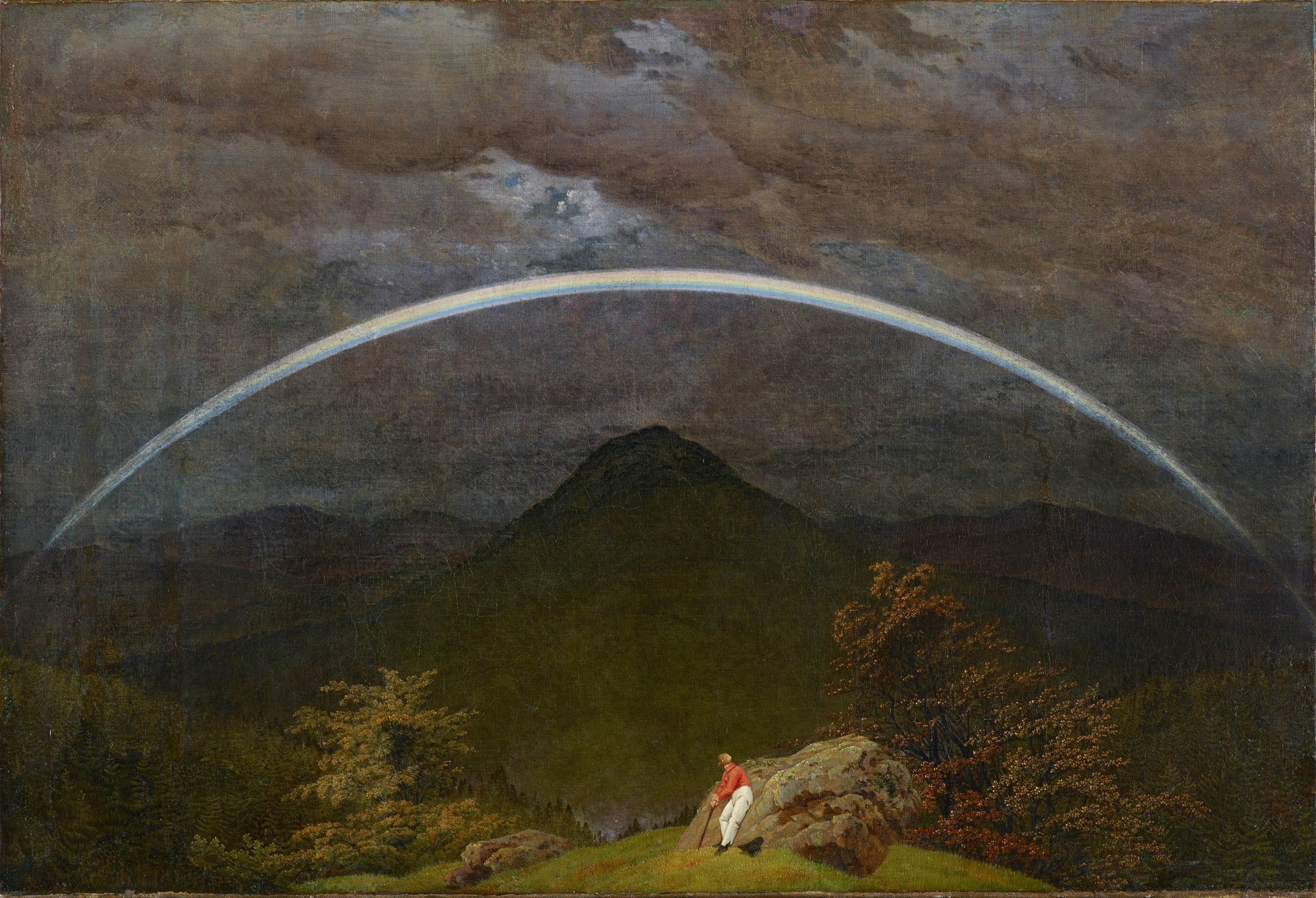
I think of Thomas Mann’s The Magic Mountain, where wealthy Europeans travel to a Swiss sanatorium to cure their tuberculosis and end up staying for years, convinced that the mountain air and the routines of the clinic are the only things keeping them alive. They become so absorbed in the world of the sanatorium—its hierarchies, its schedules, its promises—that they can’t imagine leaving. The outside world becomes unreal. Only here, in this specialized environment with its specialized knowledge, can they be truly well.
The modern wellness retreat offers the same fantasy: escape from regular life, submission to a superior protocol, transformation under the guidance of someone who knows better. But here’s what Mann understood that the Instagram posts never acknowledge: the magic only works on the mountain. The moment you leave, everything collapses. The protocols can’t be maintained. The purity can’t be preserved. Real life—with its compromises and chaos and the inability to control every input—reasserts itself.
The promise is always that you CAN take it with you, that the transformation is permanent, that you’ll return to your life fundamentally changed. But what actually happens is you return to your life, and your life is still your life.
So why do we keep going back? Not literally back to the same retreat or training or protocol, but back to the pattern—the belief that the next system will be different, will finally stick, will be the one that actually transforms us.
There’s something distinctly American about this hunger for the next cure. Not the retreats themselves—Europeans invented the sanatorium, after all—but the way we approach them. The fervor. The speed with which we adopt and discard. The ease with which we strip practices from their cultural contexts and repackage them as solutions.
In France, people eat butter and drink wine and seem unburdened by the anxiety that they should be doing something else, something better, something more optimized. In the Nordic countries, people swim in cold water and sit in saunas because that’s what people have always done, not because they read a study about cold plunges and mitochondrial health. These aren’t wellness protocols—they’re embedded in culture, in tradition, in a way of life that doesn’t require constant interrogation or improvement.
Americans, by contrast, are always looking elsewhere for answers. We borrow the surface of other traditions—yoga without Hinduism, Chinese medicine without Chinese philosophy, ice baths without Nordic stoicism—and convince ourselves we’ve found the secret. This can be a kind of innovation, an openness to new ideas. But it’s also deeply superficial, a collection of techniques severed from the cultures that created them, the very rootedness that gave them meaning.
This creates a specific vulnerability. When you have no received wisdom about how to live, no traditions passed down through generations, you become hungry for any system that promises answers. You become, in other words, the perfect target for a guru. When you’re unmoored, even a bad map feels better than no map at all.
The desire to commune and belong is universal. But what separates a community from a cult? Perhaps it’s the degree of fervor, the rigidity of dogma, the presence of a guru figure. Or perhaps it’s the paradoxical isolation that emerges when these microcosms become severed from tradition and reduced to technique—not a way of life but a hack. Yet we submit to these practices—the teacher trainings, the retreats, the longevity communities—trading agency for the illusion of control.
In Nine Perfect Strangers, a group of people arrive at a wellness resort seeking transformation and instead find themselves trapped in someone else’s vision of salvation. The resort promises healing, but what it really offers is control—an omnipotent guru, a system that claims to have the answers. The guests surrender themselves to it because the alternative—accepting that some things cannot be fixed, that suffering is part of life, that we will all eventually die—is unbearable.
The language of wellness borrows heavily from the language of purity and cleansing, concepts with deep religious roots. Detoxes, cleanses, elimination diets—these aren’t just about health but about purification, about ridding the body of contamination and sin. There’s an almost Puritanical quality to the way we approach our bodies now, a belief that if we can just be clean enough, disciplined enough, we might transcend our mortality.
Purity, transcendence, obsession with youth are hardly new concepts. Hollywood built an empire on the promise that beauty could be preserved, that time could be cheated with the right combination of discipline and intervention. These are all expressions of the same desire for control, for cheating nature. What feels different now is the democratization of the fantasy—myriad longevity and optimization tools available to anyone willing to believe that uncertainty can be solved.
I understand this impulse. The yoga room didn’t convince me, but the hunger it represented followed me for years. I tried eating paleo and keto, fasted, took supplements whose names I can barely pronounce. I tried psychedelics.
I remember lying on the floor of our Soho apartment, the noises from the street becoming more and more muffled. As the psilocybin took hold, my mind filled with the kaleidoscopic images everyone talks about. I felt that famous oneness, that dissolution of boundaries between self and world. And underneath it, maybe because of it, I could feel all my pain and sadness more acutely than ever. The drug hadn’t removed anything. It had just made me more aware of what was already there—that I will always be afraid, feel alone, crave certainty and answers. I looked at my husband, in pain too, and saw that I couldn’t help him either. I could love him, hold him, but not fix him. Each of us simply had to live alongside what is hollow, flawed, and unclean.
The truth I learned on that apartment floor hasn’t made me immune to the promise. If anything, it’s made me more aware of why the promise works. We want desperately to believe that somewhere, someone has figured out the formula—that if we just find the right system, we can transcend the fundamental uncertainty of being alive.
We can’t. But we keep looking anyway.